About the Project
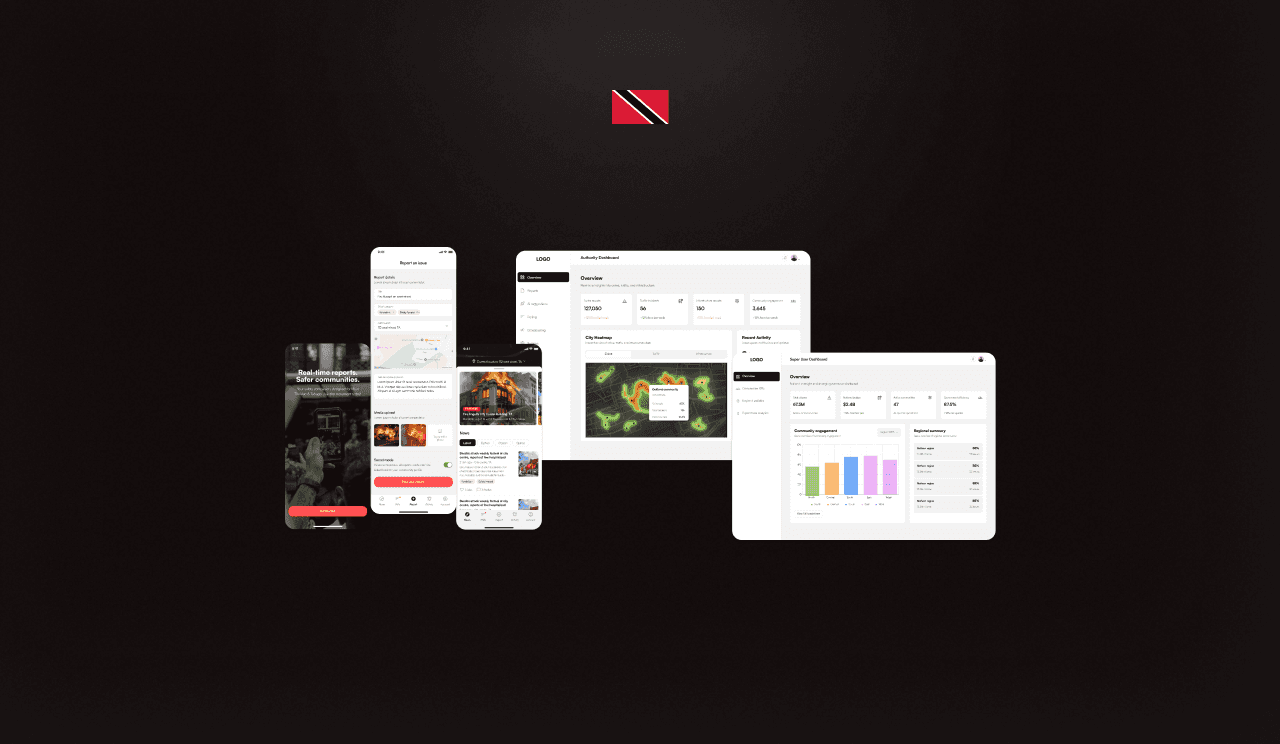
CivicSight is a civic-tech MVP designed to modernize how citizens in Trinidad & Tobago interact with government. The platform enables citizens to report local issues, while giving authorities and national leadership the tools to track, analyze, and respond in real time.
The MVP was designed for three user types:
Citizens – mobile-first portal to report and engage.
Authority users – web dashboards for city-level management.
Super users such as the Prime Minister – national-level dashboard with insights and KPIs.
The design team (lead designer + myself) collaborated over 4 weeks to research, ideate, and design the full system, covering both mobile and web experiences.
The Challenge
Government–citizen interaction is often fragmented and slow. Citizens lack trusted, anonymous ways to report issues, and authorities struggle with scattered, unfiltered data.
CivicSight aimed to:
Simplify citizen issue reporting while preserving anonymity.
Provide clear dashboards for authorities and leadership to act on data.
Build trust and transparency through intuitive, modern design.
Deliver a scalable MVP to help stakeholders evaluate the platform’s nationwide potential.
Design Approach
Our design priorities were:
Trustworthy & modern → clean dashboards and forms, subtly inspired by Trinidad & Tobago’s civic identity.
Mobile-first → ensuring citizens could report and interact with issues seamlessly on the go.
Clarity in data → making insights easy to interpret for authorities and leadership.
Competitive Analysis
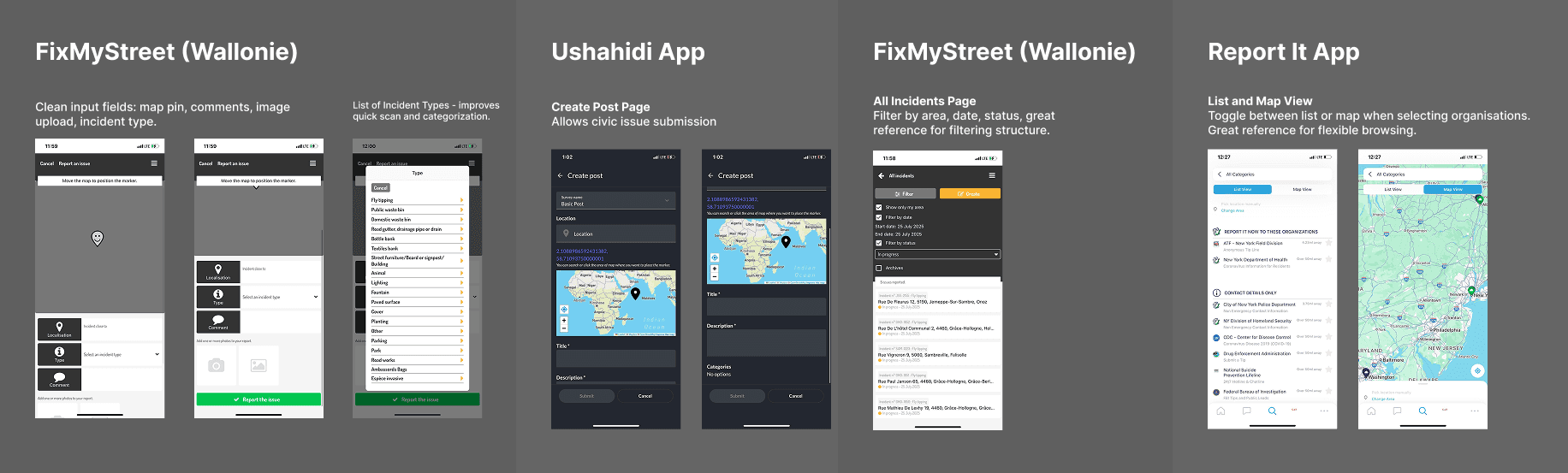
To guide the design, we studied existing civic-reporting platforms:
FixMyStreet & Ushahidi – their all-in-one reporting flows inspired CivicSight’s streamlined Report an Issue / Secret Mode design.
FixMyStreet (Filters) – robust filtering options informed how reports could be sorted by status, date, or location.
Report It – the list/map toggle inspired CivicSight’s homepage, where citizens can browse reports geographically or in a structured list.
Key Design Milestones
1. Citizen Portal (Mobile)
The citizen experience was designed mobile-first and focused on reporting, browsing, and participation:
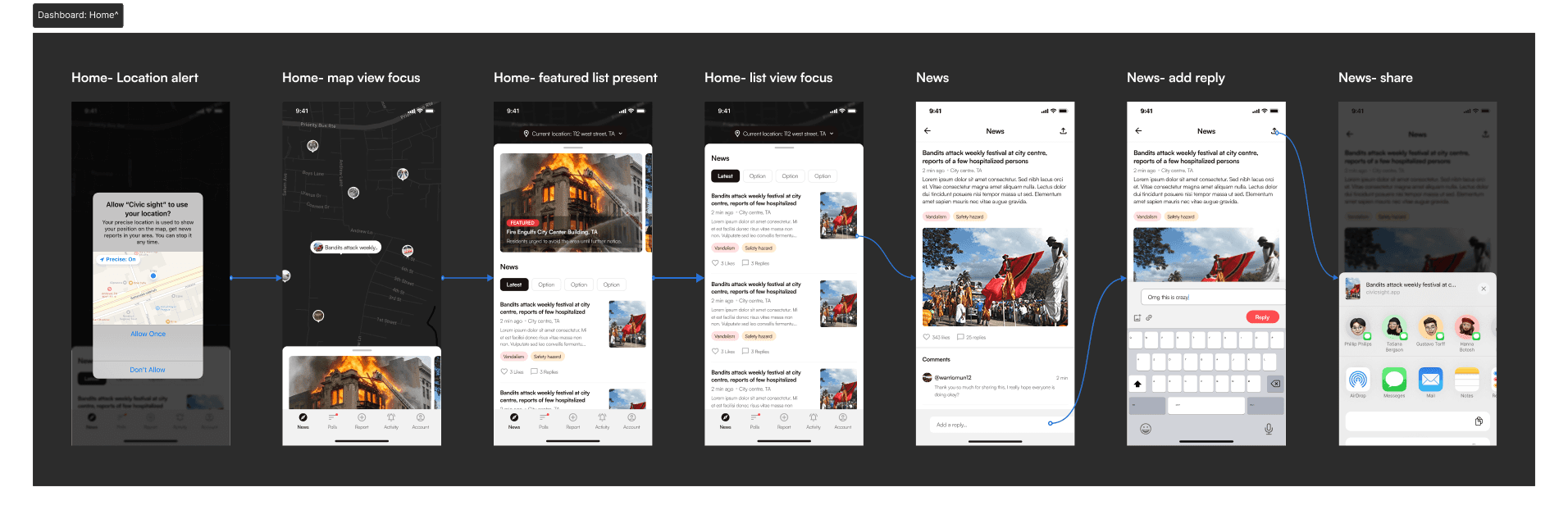
Homepage: Users can view community reports via list or map view, interact by commenting, sharing, or filtering posts.
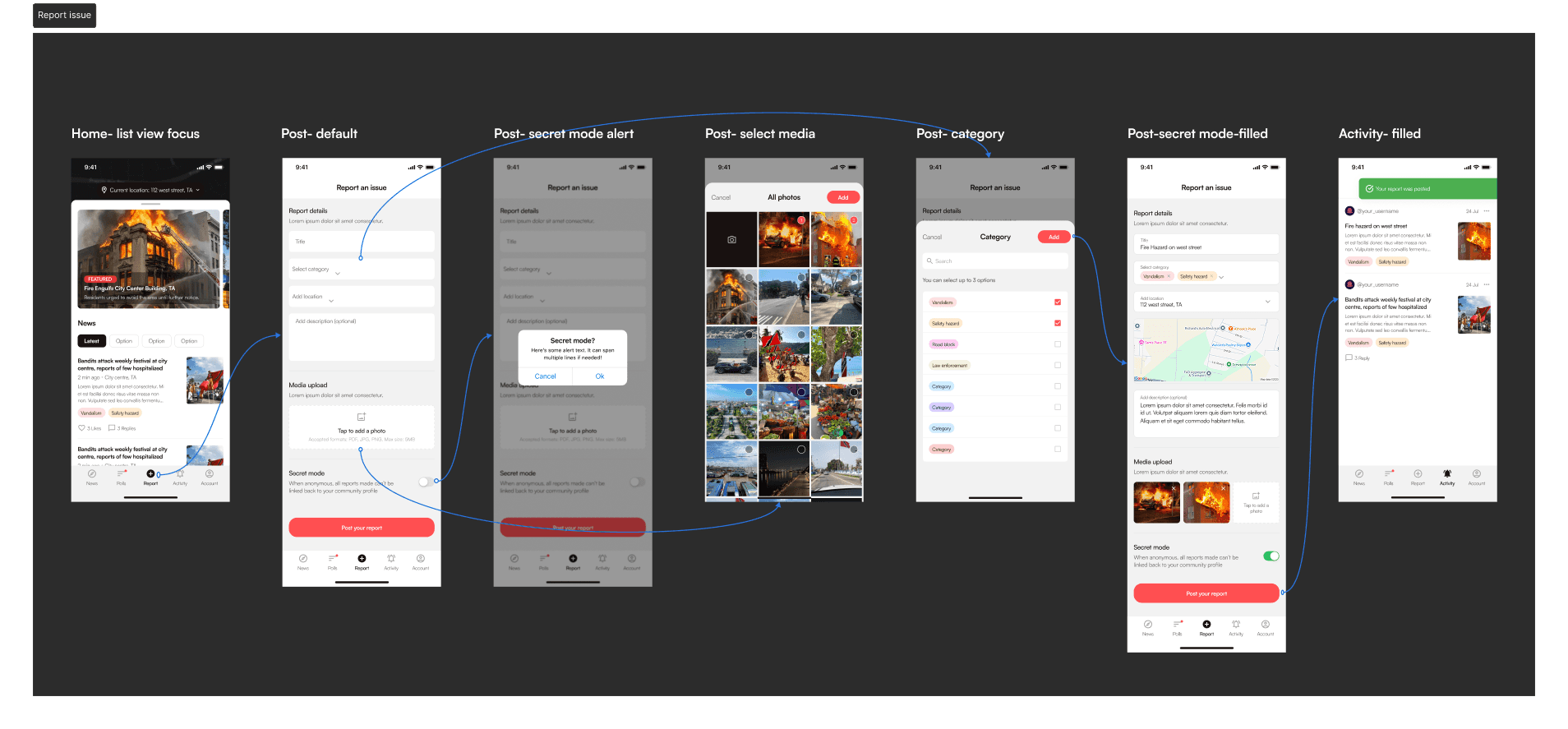
Report Issue Flow / Secret Mode: A single streamlined form where users input details, add a location, and upload media (photo + text). With the Secret Mode toggle, the report is sent anonymously.
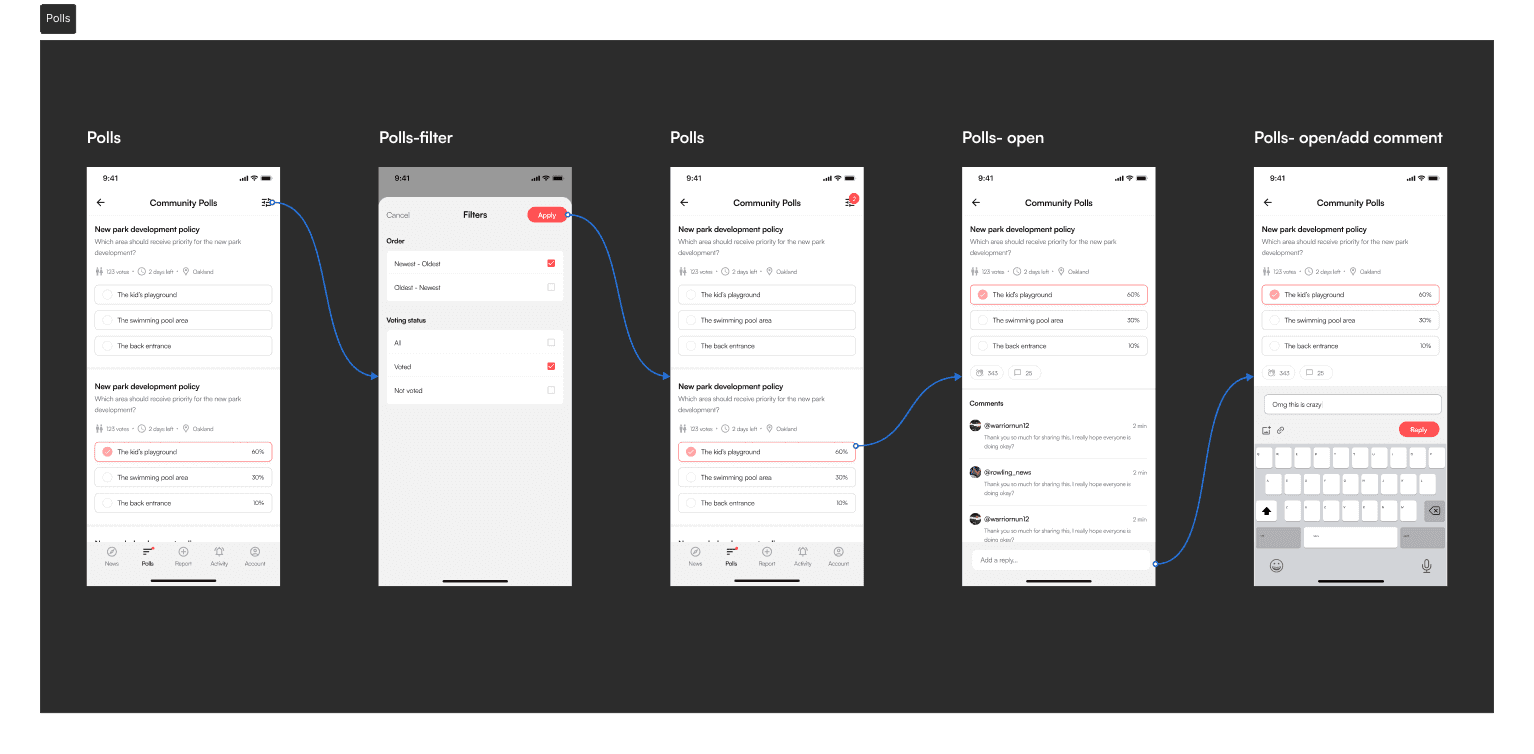
Polls: Polls created by authorities allow citizens to participate by selecting options, adding comments, and viewing results.
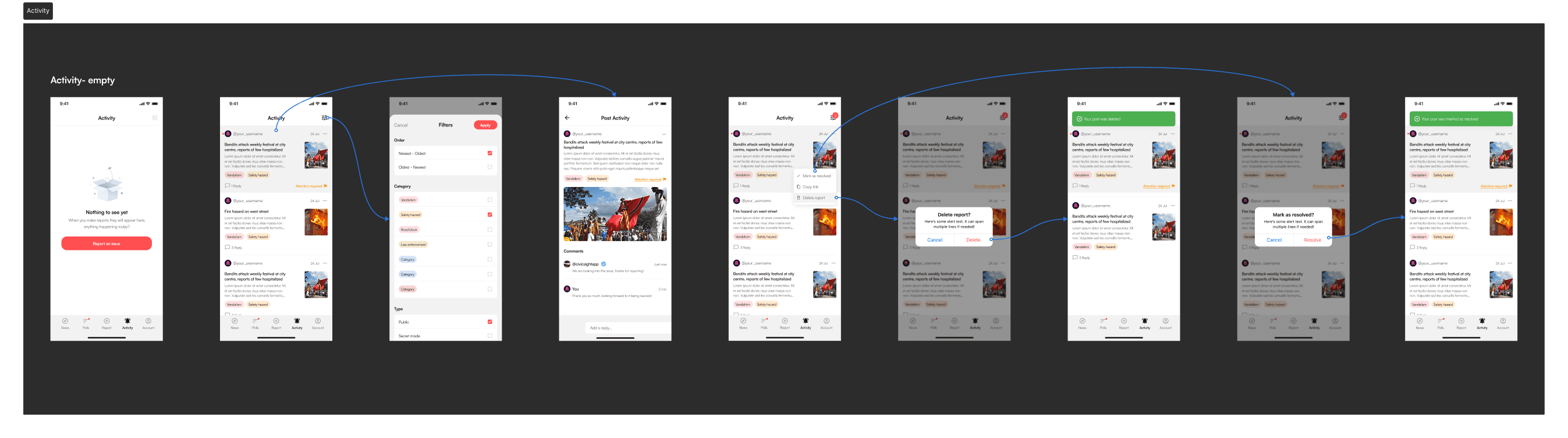
Activity Section: Citizens can track their previous reports and interactions in one place.
2. Authority Dashboard (Web)
The authority view provided real-time visibility and management tools:
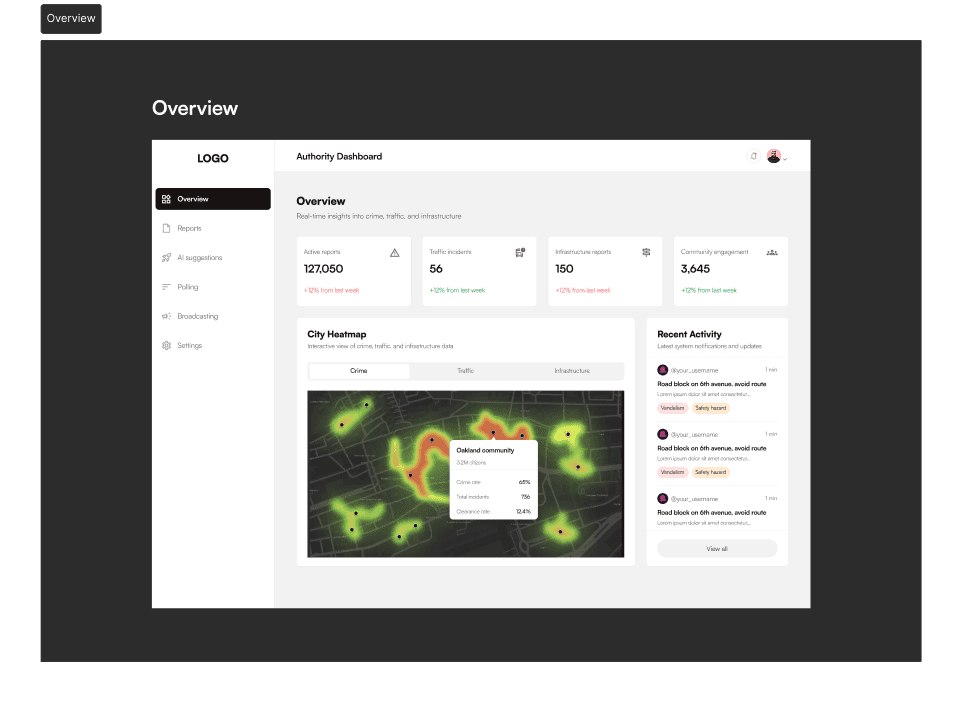
Overview Dashboard: Real-time insights with a city heatmap showing active and top reports at a glance.
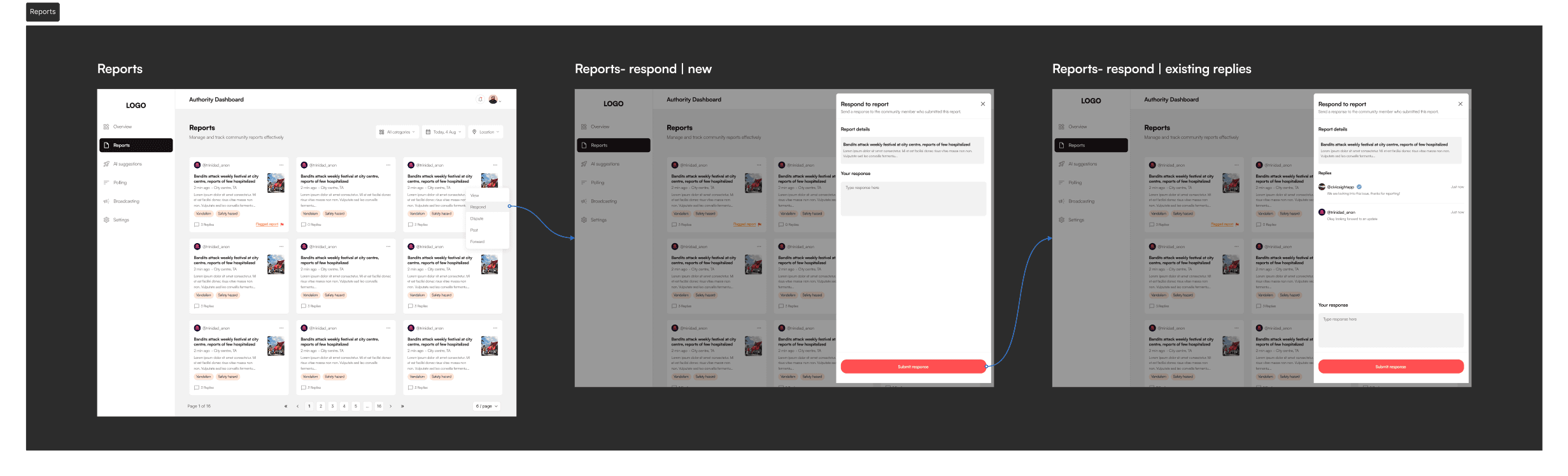
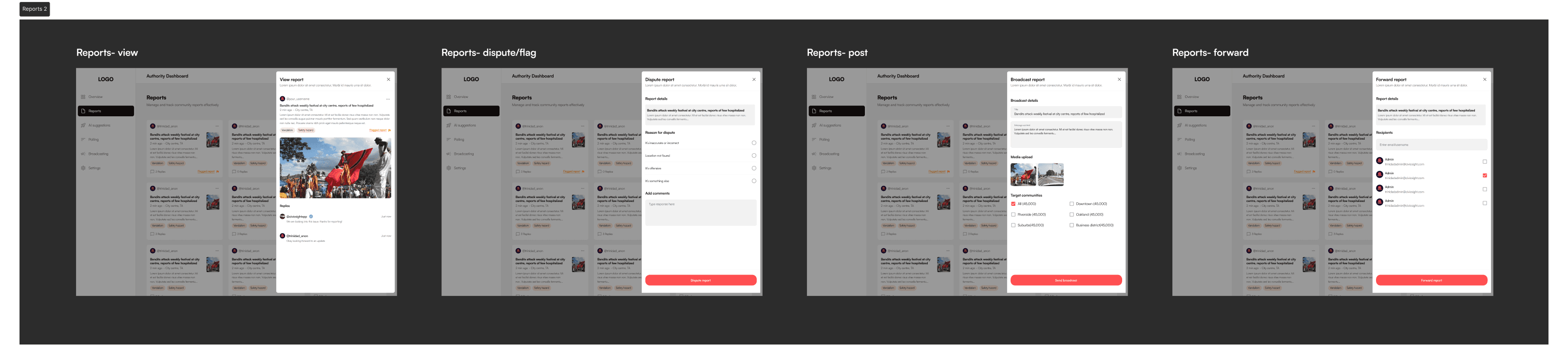
Reports Section: Authorities can manage and track reports - respond, broadcast updates, forward, or dispute them.
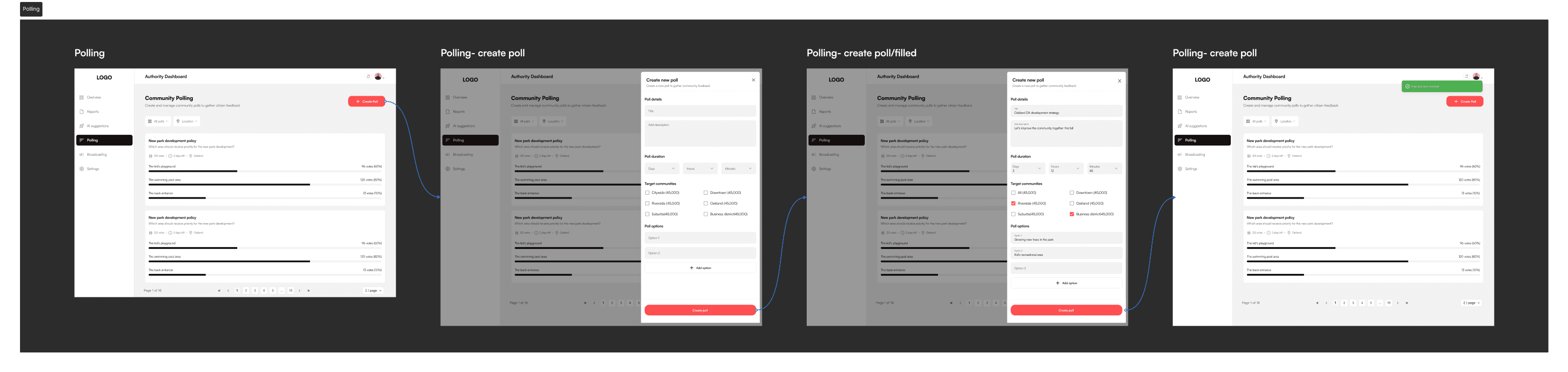
Poll Creation: Authorities can create polls targeted to specific communities or the public in general.
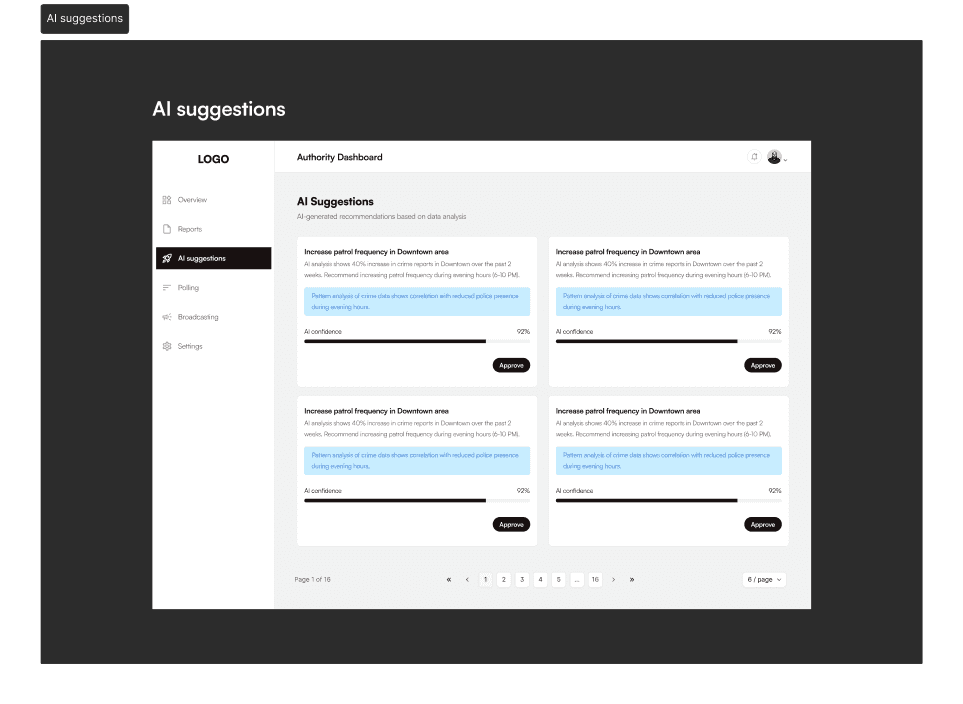
AI Suggestions: Smart recommendations generated from report data to help prioritize action.
Super User Dashboard (Prime Minister View)
For national leadership, the dashboard emphasized high-level insights:
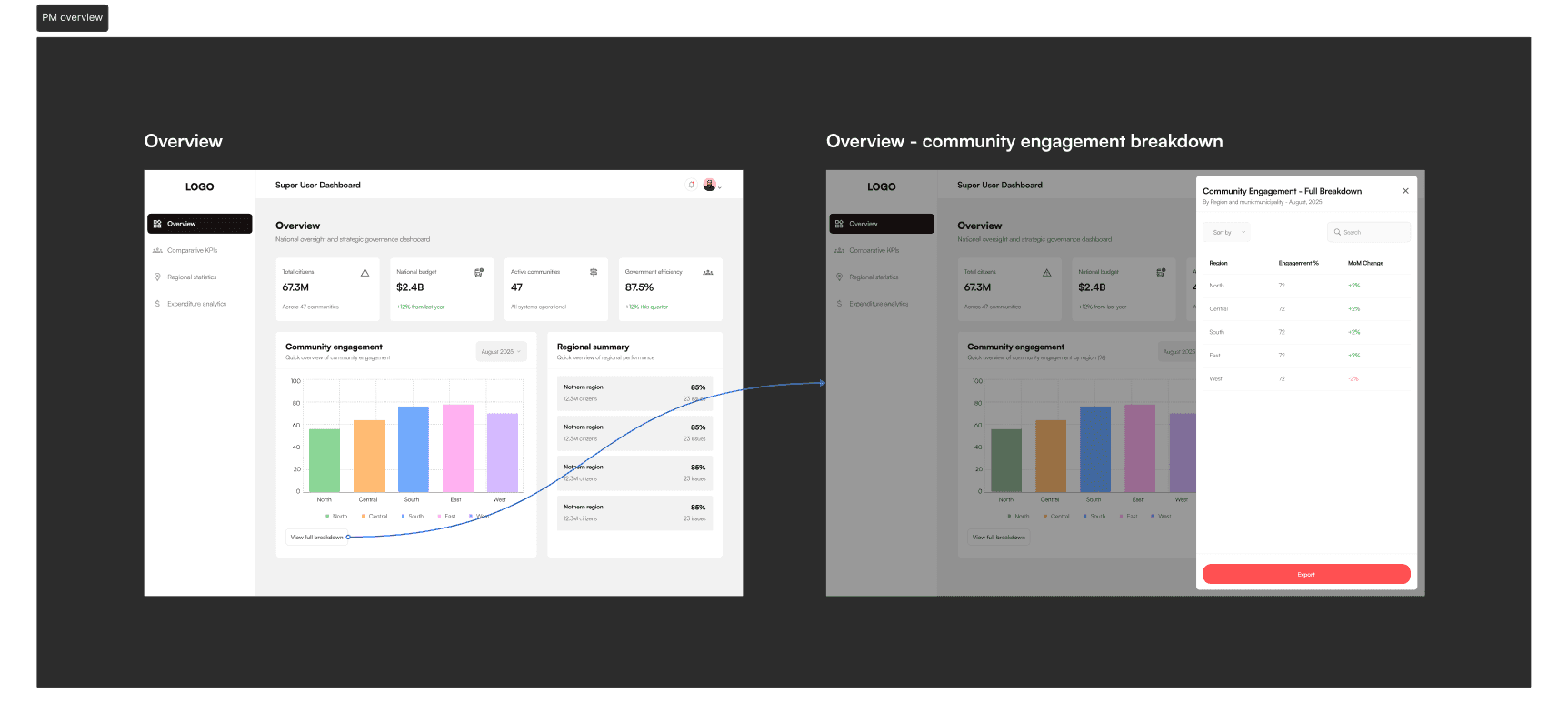
Overview Dashboard: National budget status, government efficiency metrics, and community engagement levels visualized with bar graphs for quick regional comparison.
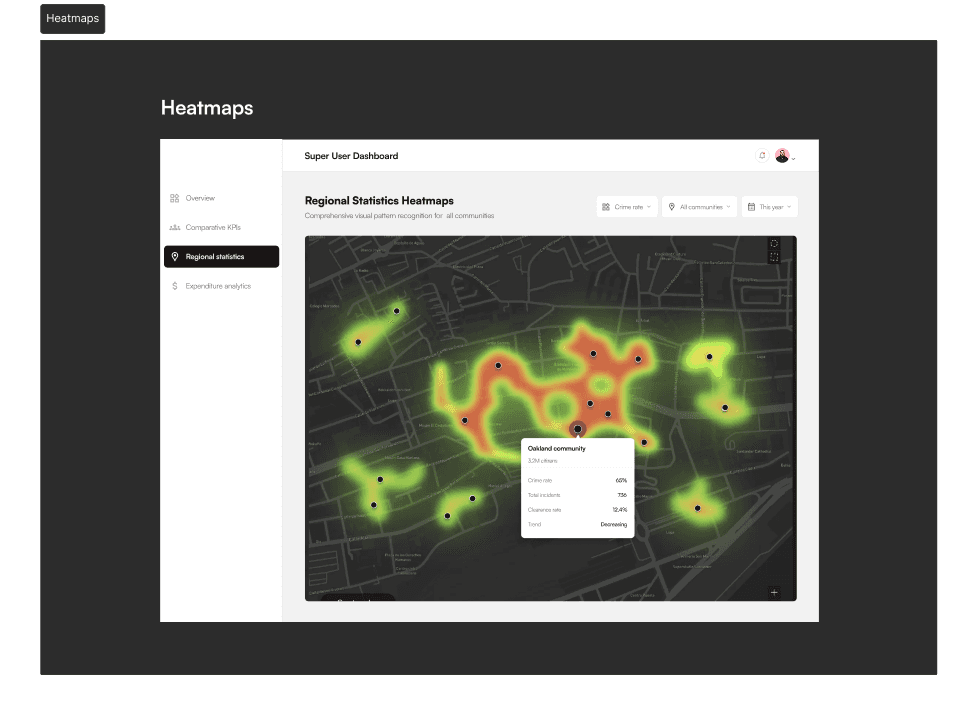
Regional Statistics: Comprehensive heatmaps highlighting patterns across all communities.
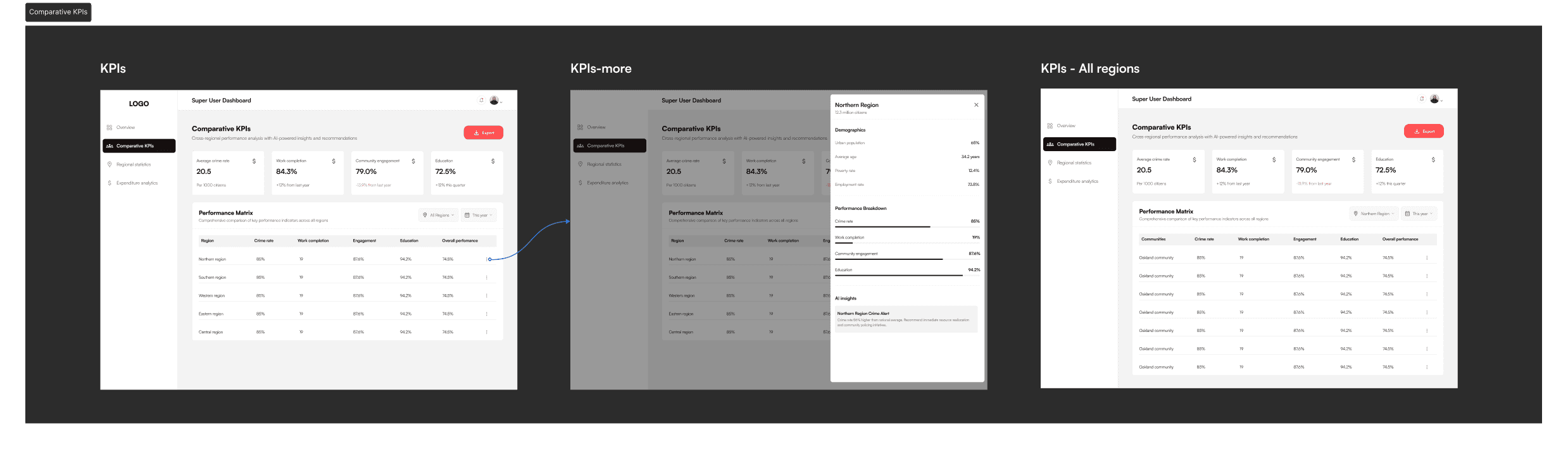
Comparative KPIs: Cross-regional performance analysis supported by AI-powered insights.
Note: Only key designs are highlighted here, though additional pages were also part of the MVP.
Outcome
Delivered end-to-end mobile and dashboard flows for citizen, authority, and super-admin roles, improving clarity and reducing reporting friction.
Streamlined the issue-submission process, enabling faster, anonymous reporting with improved task completion.
Built a functional MVP prototype that enabled stakeholders to begin evaluating the platform for potential nationwide rollout.
Translated research insights into scalable, multi-role workflows supporting both community and government needs.
Ensured cross-platform consistency by defining reusable components for mobile and dashboard interfaces.
Reflection
Working on CivicSight gave me a chance to design for both citizen-facing mobile experiences and complex data-driven dashboards. Over the course of the project, I learned how to:
Collaborate closely and openly in a small design team.
Translate competitive research into actionable flows for both citizens and authorities.
Balance simplicity for citizens with clarity for leadership.
Think at both local and national scales, creating a system that could grow with future needs.
This project strengthened my ability to design end-to-end experiences that support real-world civic impact, from community-level reporting to government-level decision-making.